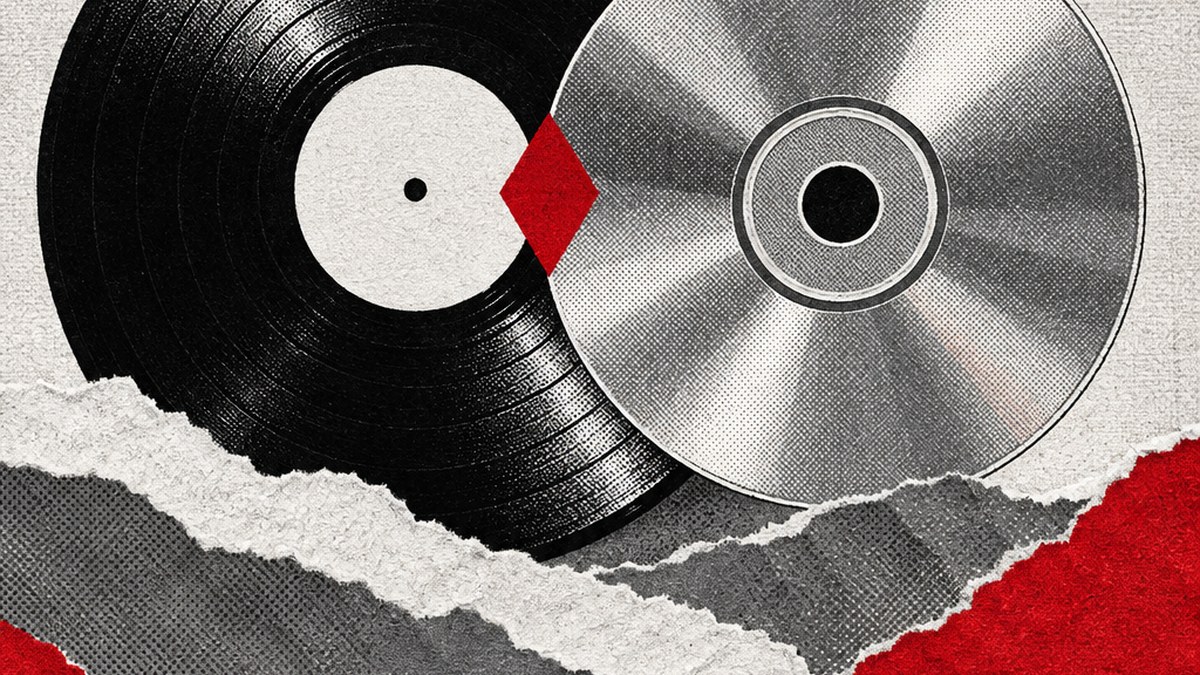
Streaming was supposed to finish off physical music. It didn’t. In 2025, U.S. vinyl sales passed $1 billion for the first time since 1983, and in the first half of 2026 CDs grew even faster than vinyl did.
Here’s what the numbers actually say, who is driving them, and why a format revival makes more sense than it sounds.
The short answer
Vinyl and CDs are coming back because fans want to own something from the artists they care about, not just access it. Streaming made listening cheap and endless. That made a physical object worth more, not less, as proof of fandom.
What the 2025 numbers show
The RIAA’s year-end report for 2025 is the cleanest data we have. U.S. vinyl revenue rose 9.3% to about $1.04 billion, on 46.8 million units, up 7.9% (RIAA). That was vinyl’s 19th straight year of growth, and the U.S. now accounts for nearly half of the format’s global value (Music Week).
CDs told a different story in 2025. Their revenue slipped to about $312 million, with units falling from 33.3 million to 29.5 million (RIAA). Vinyl brought in more than three times as much.
So, going into this year, the headline was simple: vinyl up, CDs down.
What changed in 2026
Then the midyear data flipped the CD story. Luminate’s 2026 Midyear Report found U.S. CD sales rose 16% to 16.3 million units in the first half of the year, while vinyl grew about 2.4% (Luminate). Luminate’s own headline: CD growth outpaced vinyl nearly seven to one.
Luminate points to three drivers: collection building, lower prices, and huge releases like BTS’s Arirang on a strong K-pop schedule. The key detail is that CD growth held up even after K-pop was removed from the count (Luminate). That means it isn’t one fandom buying multiple editions. It’s broader.
Who is actually buying
The easy assumption is that this is nostalgia, people in their forties rebuying the albums they sold. The data points somewhere else. Reporting on the CD revival describes younger listeners picking up the format for sound quality and ownership (The Detroit News).
We think the better frame is fandom rather than age. A streaming play costs a fan nothing and sends an artist very little. A record or a disc is a deliberate choice: a piece of the artist you can hold, display and give as a gift.
Why CDs, specifically, are surging
Vinyl had a fifteen-year head start, so why are CDs the growth story now? Three practical reasons:
- Price. A new CD usually costs a fraction of a new LP. For a younger buyer, that’s the difference between buying one album and buying three.
- No turntable required. Plenty of cars, laptops and cheap players still handle discs. Vinyl needs a setup.
- Collectibility. Alternate covers, photo cards and deluxe packaging turn a CD into an object, not just a container for audio.
What streaming didn’t replace
Streaming is still the majority of the business and isn’t going anywhere. The physical revival doesn’t compete with it. It sits on top of it. People discover music on a playlist, then buy the physical version of the thing they love.
That is the part of the story we find most interesting. Streaming turned music into something everyone has access to. Physical media turned it back into something you can choose.
The bottom line
- U.S. vinyl passed $1 billion in 2025, its 19th straight year of growth.
- CDs fell in 2025 but jumped 16% in units in the first half of 2026, far outpacing vinyl.
- The growth is driven by fans building collections, lower prices and big releases, not just nostalgia.
- Physical formats aren’t replacing streaming. They’re what fans buy after streaming introduces them to an artist.
If you have a stack of discs in a closet, it may be time to find a player.
Music — October 1, 2026